
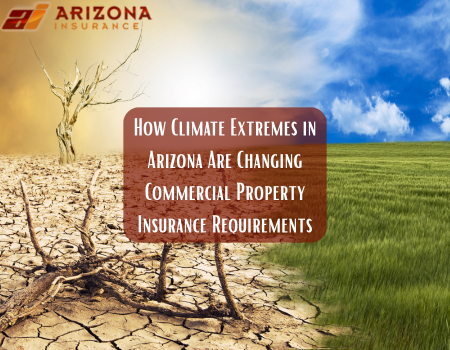
 Extreme weather isn’t new to Arizona, but the intensity and frequency of climate events in recent years are reshaping how insurers evaluate commercial properties. From prolonged heat waves to unpredictable monsoon seasons and wildfire threats, businesses across the state are navigating a new era of risk. As a result, Arizona climate insurance requirements are evolving quickly, and commercial property owners who fail to keep up may face higher premiums, stricter underwriting, or even coverage denial.
In 2025, insurers are taking a far more proactive and data-driven approach to evaluating risk. Climate extremes are no longer viewed as occasional disruptions, they are now a core factor in underwriting decisions, policy pricing, and mandated mitigation measures.
Heat: The Silent Driver of Rising Insurance Demands
Arizona’s record-breaking heat is one of the biggest contributors to changing commercial property requirements in AZ. While heat doesn’t cause the dramatic damage of a storm or wildfire, it steadily weakens building materials, roofing systems, electrical infrastructure, and HVAC units.
Insurers are responding by tightening inspection standards and requiring additional documentation. Businesses are increasingly asked to:
- Demonstrate that roofs meet higher heat-resistance ratings
- Maintain updated HVAC units capable of handling extreme temperature loads
- Show evidence of regular maintenance schedules to reduce equipment failure risks
Properties with outdated systems or inconsistent maintenance records may be flagged as higher risk, resulting in elevated premiums or added policy conditions. For many businesses, staying insurable in 2025 means investing in heat-resilient infrastructure rather than waiting for equipment failure.
Monsoons: Sudden Storms, Sudden Losses
Monsoon seasons have become less predictable, with sudden storms causing rapid flooding, wind damage, and power outages. Insurers now view monsoon-related losses as one of the fastest-growing categories across the state.
This shift is pushing commercial property owners to adopt more stringent risk mitigation 2025 measures.
Many insurers now require or strongly encourage:
- Reinforced drainage systems
- Updated roofing structures capable of withstanding uplift from extreme winds
- Documented flood-mitigation plans, even for properties outside designated flood zones
- Surge protection systems to reduce electrical losses
The growing unpredictability of monsoons is pushing insurers to examine not just a building’s structure but also a company’s long-term prevention strategy. Buildings that lack updated drainage or storm-ready features may face higher deductibles or limited storm coverage.
Wildfires: Expanding the Risk Map
Wildfires used to be associated primarily with rural areas, but expanding development and shifting climate patterns mean commercial zones are now closer to fire-prone land than ever before. Insurance companies are expanding fire-risk maps to include areas once considered safe, and this has major implications for businesses throughout Arizona.
In high-risk zones, insurers are increasingly requiring:
- Defensible space around commercial buildings
- Fire-resistant landscaping and building materials
- Upgraded fire suppression systems
- Proof of compliance with local fire-safety inspections
Some insurers are adding mandatory wildfire mitigation clauses before renewing a policy. Those who ignore these requirements may face non-renewal, reduced coverage limits, or significantly higher premiums.
Stricter Underwriting Trends for 2025
Across the board, underwriting in 2025 is becoming far more personalized. Instead of relying on broad regional data, insurers now use granular climate models, satellite imagery, and property-specific data to evaluate risk. This shift means two similar buildings only a few blocks apart can be assessed differently based on micro-environmental factors such as wind patterns, surface temperatures, and proximity to natural fuel sources.
Underwriters are also scrutinizing:
- Age of commercial roofs
- Condition of electrical systems
- Business continuity plans
- Security measures to prevent storm-related theft or vandalism
The message is clear: insurance companies want proof that businesses are actively reducing avoidable risks, not simply reacting after damage occurs.
How Businesses Can Stay Insurable in a Changing Climate
While rising insurance requirements may feel overwhelming, Arizona businesses can stay ahead by implementing smart and strategic mitigation practices. This includes:
- Investing in heat-resistant roofing and energy-efficient HVAC systems
- Maintaining clear drainage paths and upgrading stormwater controls
- Adopting fire-safe landscaping, fireproof materials, and defensible zones
- Keeping meticulous maintenance logs and inspection reports
- Reviewing insurance policies annually to align coverage with emerging climate risks
These upgrades not only help companies stay compliant with new insurance standards, they also reduce downtime, protect assets, and preserve long-term property value.
Arizona’s climate is evolving, and the insurance industry is evolving with it. Heat extremes, unpredictable monsoons, and expanding wildfire zones are pushing insurers to tighten standards and demand stronger mitigation from business owners. In 2025, securing Arizona climate insurance is no longer just about paying premiums, it’s about demonstrating resilience.
For commercial property owners, the path forward is clear: adopt climate-ready infrastructure, maintain thorough documentation, and embrace proactive risk management. The businesses that adapt now will not only remain insurable, they will be better equipped to thrive in Arizona’s challenging but opportunity-rich environment.